


Olivia Thomas
How Play-Based Learning Transforms Early Education
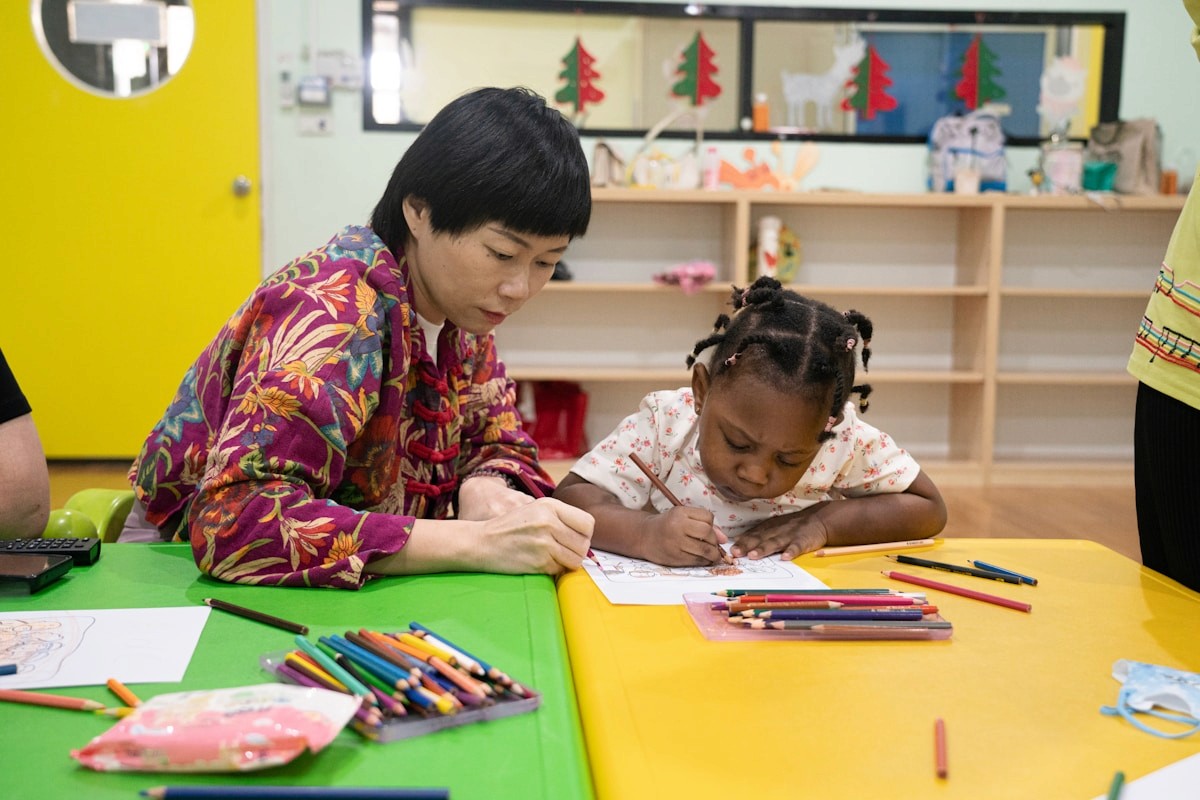
At Kinter School, we believe the most powerful classrooms are those filled with genuine curiosity and joy. Play-based learning blends structured educational content with purposeful play, creating an environment where children absorb knowledge naturally. When children explore, discover, and engage through games and hands-on experiences, they develop academic, social, and emotional skills simultaneously — laying a strong and joyful foundation for lifelong learning.
Understanding Play-Based Learning
Play-based learning is an educational philosophy that uses play as the primary vehicle for developing knowledge and skills. Rather than passive memorisation, it encourages children to ask questions, make choices, and solve problems through active exploration. Teachers act as thoughtful guides who create stimulating environments where discovery feels natural. Research consistently shows that children learn more deeply and retain information longer when they are actively engaged and emotionally connected to their learning.
Language and Literacy Through Play
Play-based learning creates powerful opportunities for language development that traditional instruction alone cannot match. Children who engage in storytelling games, puppet plays, and role-playing activities naturally sharpen vocabulary, listening comprehension, and verbal expression. Reading corners, word-building games, and shared book experiences deepen these skills further. When literacy is woven into play, children stop viewing reading as a task and begin to see it as part of the adventure.
Mathematics in the Classroom Playroom
Play provides the ideal context for introducing early mathematics in concrete and meaningful ways. Activities such as sorting objects by colour and shape, building with blocks, counting game tiles, and measuring in a pretend kitchen reinforce foundational number concepts children can truly feel and understand. They develop number sense, spatial awareness, and logical reasoning through activities they genuinely enjoy. This hands-on approach makes abstract concepts tangible and builds real mathematical confidence before formal instruction begins.
Science and Discovery in School
Young children are natural scientists and our classroom honours that curiosity fully. Simple experiments — growing plants, exploring magnets, observing insects, and mixing safe materials — introduce scientific thinking in age-appropriate and engaging ways. Children observe, predict, test, and discuss their findings together, gradually developing analytical reasoning, scientific vocabulary, and genuine perseverance. These early science experiences ignite a love of enquiry that carries forward through every stage of academic and personal learning.
Social Skills Through Cooperative Play
Play-based classrooms are natural environments for building essential social skills. Children learn to take turns, share resources, resolve disagreements with respect, and collaborate toward shared goals. Group activities like board games, building projects, and team dramatic play teach cooperation and communication through authentic and enjoyable experiences. These interactions help children build meaningful friendships, develop genuine empathy, and gain the emotional intelligence they need to navigate relationships successfully throughout their entire school journey.
The Role of Our Teachers
Skilled educators are essential to making play-based learning truly effective. Kinter School teachers observe children carefully during play, identify meaningful learning opportunities, and guide activities toward educational goals without diminishing the joy of exploration. They ask open-ended questions, introduce rich vocabulary at the right moment, and scaffold challenges carefully to each child’s developmental level. This intentional and caring approach ensures that every play experience carries real educational value while keeping curiosity and enthusiasm at the absolute centre of school life.
Long-Term Impact on Academic Achievement
Children who experience quality play-based education in their early years demonstrate significantly greater academic achievement, social competence, and emotional resilience over time. The skills built through play — perseverance, creativity, communication, and critical thinking — transfer directly to later classroom performance and far beyond. At Kinter School, we are proud to provide an environment where every child is given the genuine opportunity to learn, grow, and thrive through the proven and enduring power of purposeful play.

